
Menu
FACTORS TO CONSIDER WHEN SELECTING THE APPROPRIATE CONSTRUCTION METHOD
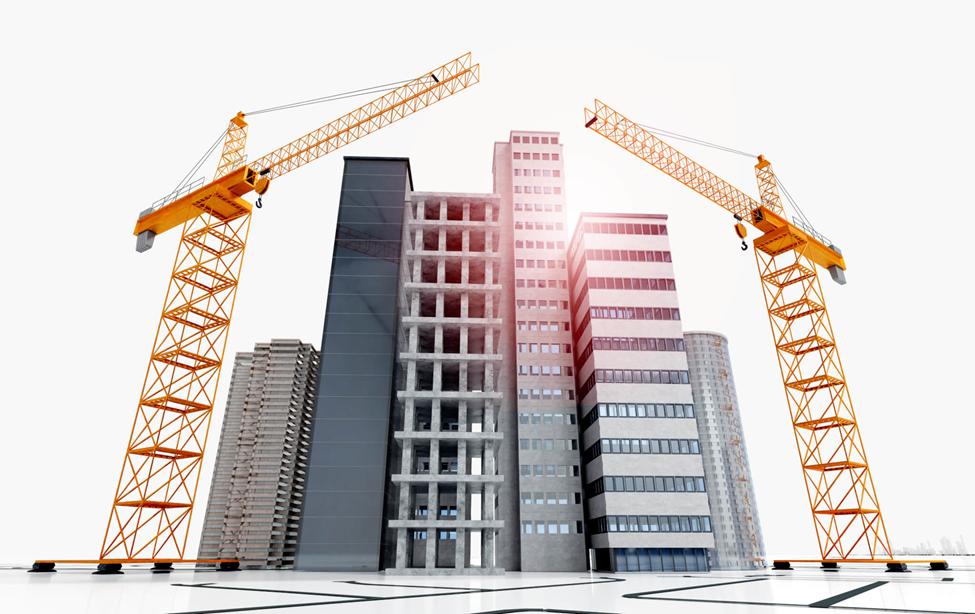
IStock/GettyImages/Google
The Construction Industry is considered as one of the most conservative industries in the world.
BELOW are some of the factors to consider when selecting the appropriate Construction Method include;
1. Project Design;
specific designs may be inclined towards a particular construction methods; for example high-rise building may favor the use of heavy equipment while alternative labor-based methods can be adopted for the low-rise buildings.
2. Technical Feasibility and Quality;
Specific project technical requirements may be evaluated such that the proposed construction methods utilizes available resources; for example deep pile driving is highly capital intensive while masonry walling is highly labor intensive.
3. Project Costs;
Specific costs associated with material, labor, equipment etc. may influence the choice of alternative construction method depending on cost analysis and the available resources; selection is often inclined towards the most cost-effective construction method.
4. Project Timelines;
Project timelines with tight schedules minimize opportunities for assessment and comparison for merits of alternative construction methods; selection is often skewed towards known and tested construction method.
5. Project Size;
Project size may dictate the choice of alternative construction methods; selection of the appropriate construction methods are often strategic and tactical for the best sequencing of operations.
6. Project Location;
Project location may influence the choice of the alternative construction methods since it directly affects availability of labor and serviceability equipment etc.
7. Industry Traditional Tendencies;
Conventional and proven construction methods may create extreme reluctance to trying new alternative methods.
8. Available Resources;
availability of resources in terms of labor, material, equipment, management and supervisory skills significantly affects the choice of construction methods.
9. Lack of Information;
Inadequate information to make a cost and time comparison may influence the choice of the alternative construction methods; such information are not always readily available.
10. Bidding Methods;
Bidding that allows foreign contractors who may submit lower bids that appear more attractive; leading to opting for their particular construction methods.
11. Government Policies;
Policy decisions and regulations that may influence the qualifications of the project contractors and define the required construction methods.
12. Foreign Aid;
Foreign funded projects may come with rigid conditions; may outline requirements for particular construction methods.
Considering these factors will allow for quick assessment of the merits of the available alternative construction methods based on cost analysis and the construction timelines thus creating an opportunity for the Engineers and other professionals to select the appropriate construction method.
Published by Geostruct (January 28, 2024)
CONSTRUCTION TIPS FOR MANAGING THE BUILDING COSTS
IStock/GettyImages/Google
The following are some of the building construction tips than you should consider before commencing a project;
1. Choose the right location for constructing your project;
When identifying a plot, consider sites with gentle rolling topography that are easily accessible, this will reduce on the overall construction cost and timelines for your project. Avoid swampy sites or sites with poor soils because this will translate to costly foundations. Also avoid sites that are located in waterways.
2. Budget for expected project cost;
Have an idea of how much it will cost you to construct your project and will be instrumental in prioritization of specifics and drawing up a complete plan for financing your budget for the project.
3. Engage professionals in the design and construction process;
Engage qualified consultants team consisting of Architect, Engineer and Quantity Surveyor to guide you on the planning, conceptualizing and constructing your project within your planned budget
4. Optimize the floor spaces and opt for simple designs;
Optimize available space and reduce on unnecessary floor areas which may contribute to increased construction costs. The consultants will be able to advice you on how to optimize the floor areas for your budget.
5. Have and understand the written contracts before engaging;
Insist on a written construction contract that will protect you from non-performance through clearly defined terms of engagement, the expected scope of deliverables and timelines within a clearly outlined cost
6. Acquire all the required drawings and construction permits;
Ensure that all the necessary construction permits for your project are obtained before the construction begins such that you are in good standing with the government jurisdictions. The consultants will be able to produce the required drawings and advice you on the required permits.
7. Build during the dry season;
Building during the rainy season always lead to direct or indirect losses relating to construction material, time and labor. Also, the rain may affect accessibility to the site and the timely delivery of site materials
8. Use locally available materials for construction;
Prioritize the use of locally available construction material with the overall objective of reducing your projects construction costs and eliminating the uncertainties that may arise from material delivery timelines.
9. Avoid making changes on the design during construction;
Avoid making design changes during the construction which may lead to time and costs overruns and possibly compromise the structural integrity of your project
10. Pay for works done based on achieved milestones;
Use achieved milestone payments approach to enable you track the program of works for your project and link it to your payouts. Such payments are easier to administer because they are based on the contractors performance
Published by Geostruct (September 8, 2023)
CAUSES OF BUILDING COLLAPSES

A residential building under construction collapses and leans on an existing adjacent building in Kinoo, Kiambu County, Kenya. (Google)
The following are some of the possible causes of building collapses based on our experience;
1. Incompetent builders;
Selection of builders without assessing and considering the necessary qualifications probably due to being the cheapest or lowest bidder, corruption, nepotism and lack experience or ignorance of the developer.
2. Poor workmanship;
Incompetent builders may result into poor workmanship such as poor vibration of placed concrete leading to honey combing etc.
3. Poor concrete Mixes;
Poor concrete has been the leading cause of building collapses. Incompetent builders may not have qualified personnel that are able to achieve consistent concrete strengths in all mixed batches.
4. Ignoring Engineering Errors;
Incompetent builders may not have qualified personnel that are able to interpret and possibly identify errors that sometimes get spotted during construction. Such errors may include omitted reinforcements in certain critical areas etc.
5. Disregarding specifications and drawing details;
Incompetent builders may disregard the issued details and implement their own perceived details without consulting the designers. Such may include changing floor plans, changing construction materials with inadequate strengths, fixing reinforcements in wrong places, providing insufficient laps and concrete covers to reinforcements etc.
6. Inadequate designs;
Incompetent designers may provide inadequate details that may become disastrous when implemented. Such designs may lead to column failures, punching shear failure on the pad foundations, deferential building settlement etc.
7. Lack of supervision;
Lack of continuous oversight and inspections may lead to non-compliance with the approved designs and specifications thus compromise the quality of construction works.
8. Unauthorized alterations and change of user;
Very common with developers who change the use of a building without consulting the designers. Such include changing a residential to a commercial or storage building that may lead to overloading etc.
9. Poor enforcement of building control regulations;
Government enforcement agents have been laxity in enforcement of building control regulations probably due to corruption from the field agents, lack of institutional capacity and disjointed coordination between the various agencies
Published by Geostruct (July 21, 2023)
WARNING SIGNS TO WATCH OUT FOR IN A CONTRACTOR
EHStock/GettyImages/Google
The following are some of the warning signs in a contractor that must never be ignored;
1. Unwilling to get into a written agreement;
Agreement outlines specific costs for labor and material, project delivery timelines, and payment terms among other important aspects. A contractor that avoids written agreements is likely to be non-committal to fulfil required obligations.
2. Unable to produce registration or licensure documents;
Registration with bodies such as Registrar of Companies, Kenya Revenue Authority, National Construction Authority, and Relevant Government Ministries among others is intended to protect the public by verifying the contractor’s professional standing hence assist in establishing reputation. A contractor that is unable to produce these documents is likely to have questionable operations.
3. Unable to demonstrate methodologies for execution of the works;
Methods of constructing a project are important for the planning and executing site operations. A contractor that is unable to demonstrate proper construction methodologies is likely to mismanage the project.
4. Unable to provide adequate portfolio and/or references;
Portfolios and references provide highlights and showcase samples of relevant works that have been successfully delivered. A contractor that is unable to provide a portfolio or references may be lacking capacity to deliver the project and the history of non-performance may not be verified.
5. Demands large percentage of cash only down-payments;
Down-payment is payment made in good faith for purchase of long lead items or as a show of commitment to the project and typically range from 10% of the full contract price. A contractor that requests for large cash only down-payments is likely to be non-committal to the performance of the contract.
6. Avoids or is slow to written correspondences;
Written correspondence offers records for future reference that is legally valid. A contractor that avoids written correspondence is likely to be incompetent or intentionally non-committal to the successful delivery of the project.
7. Unwilling to issue a performance security and/or all risk insurance including third party liability;
Performance security is a financial guarantee that protects against non-performance of the contractor while all risk insurance protects the contractor against financial liability due to property damage and injuries. A contractor that is unwilling to issue performance security and/or risk insurance when required is likely to be non-committal to fulfilling required obligations.
8. Unwilling to provide CVs for key technical staff for verification;
CVs outlines the relevant work experience, skills and academic qualifications for key technical staff. A contractor that is unwilling to provide CVs for the key staff may be lacking qualified staff for the successful delivery of a project.
9. Unable to provide financial standing including the projected cash flows when required;
Financial standing and projected cash flows outlines the available cash for successful completion of the project. A contractor that is unable to provide cash flow documents may lack the ability finance the expenditures associated with labor wages, purchase of material and supplies, and project operations among others.
10. Unable to provide documents of owned equipment and/or agreements with equipment suppliers;
Equipment makes the construction works to be executed faster and in a more efficient manner. A contractor that is unable to provide a list of owned equipment or pre-arranged agreements with equipment suppliers may lack capacity to deliver projects on time and of desired quality.
Published by Geostruct (May 31, 2023)
EARTHQUAKE AND BUILDING STRUCTURES
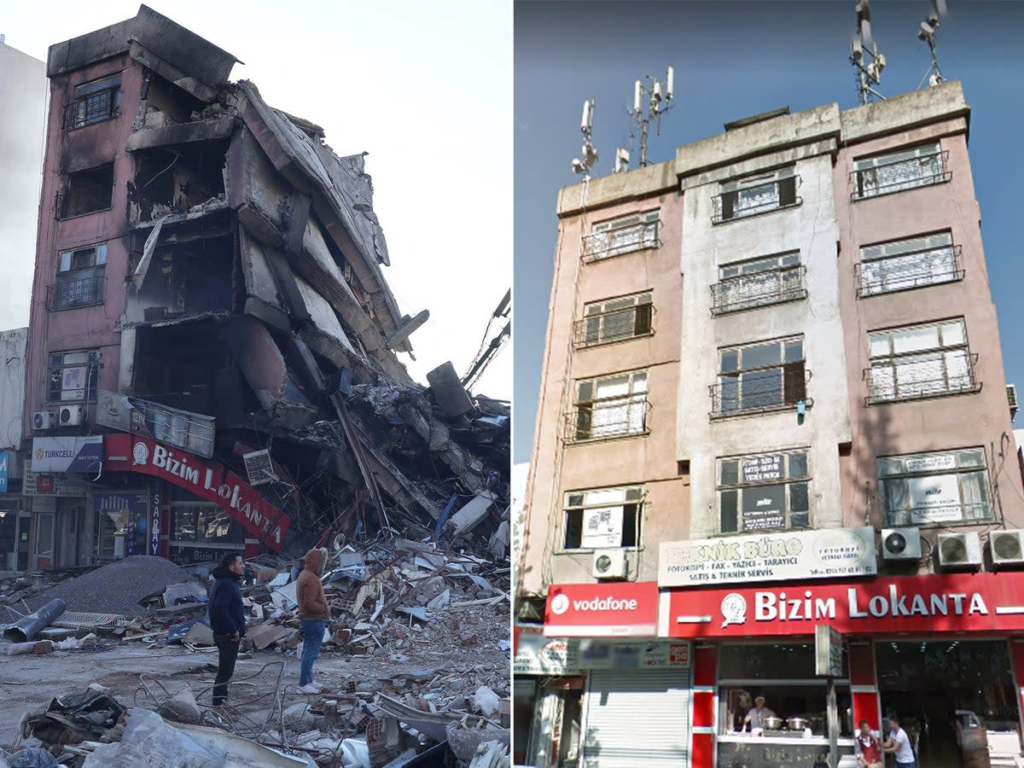
Left: Collapsed buildings in Central Kahramanmaras, near the epicentre of the February 06, 2023 Earthquake. Right: Same street in 2018. (AFP/Getty/Google)
Earthquake is an intense shaking of the ground surface caused by sudden movements along the fault lines. Such movements release energies which are spread through the Earth's layers in the form of seismic waves. The sudden movements usually occur due to long-term deformations and the built-up stresses within the Earth.
The strength of Earthquakes is commonly measured using two scales;
1. Richter scale; measures the Magnitudes by estimating the amount of energy released at the source of the Earthquake
2. Mercalli scale; measures the Intensities based on witnesses personal experiences and the observed extent of damage to buildings at a given area
The Richter scale was developed scientifically using the Mercalli scale and the accurate records of measurements from seismographs by C. F. Richter (an American seismologist). The Richter scale simplified the comparison of magnitudes regardless of the global location.
In February 06, 2023, Turkey and Syria experienced one of the most catastrophic Earthquakes with Magnitudes of 7.8 in 100 years. Apparently, Turkey is located in an area with several fault lines, making it one of the countries with the most active Seismic zones globally.
In Kenya, the Earthquake hazard is classified as medium meaning that there is a 10% chance for the occurrence of potentially damaging Earthquake within the mapped Seismic zones in 50 years. The highest Magnitude ever recorded in Kenya is 6.9 in the year 1928.
The Structural Engineers and other Construction professionals in Kenya must always consider the effects of Earthquake Hazard in all phases of project implementation including project planning decisions, project designs and construction methods.
The Structural Engineers should therefore, design Earthquake Resistant building structures with sufficient strength and ductility to withstand large tremors. Most of the Earthquake design standards provide for buildings that can;
1. Resist minor Earthquakes without damage
2. Resist moderate Earthquakes without significant structural damage, but possible non-structural damage
3. Resist major Earthquakes without collapse, but possible structural and non-structural damage
The Ground movements due to Earthquakes usually cause the various parts of buildings to move differently with respect to their foundation, which results into relative deformation and generation of additional internal forces within the buildings structure
It is worth noting that, to manage potential damage to buildings during major Earthquakes, the following global design approaches have been recommended; increase ductile behavior of the building frame to allow for inelastic responses, increase damping using the energy dissipation devices, and/or increase natural period by isolating the building foundations.
Published by Geostruct (May 08, 2023)
CONSTRUCTION SITE SAFETY TIPS

BeauStocker/Shutterstock.com
Construction sites is one of the riskiest places to work in the world. Injuries or even death often occurs.
However these risks can be reduced or completely avoided by practicing proper safety and health precautions.
The Site managers and site supervisors must endeavor to comply with OSHA standards at all times.
below are simple tips or ways of preventing injuries;
1. Always wear personal protective equipment (PPEs) while at the site. this include safety boots, safety helmet, overalls reflector jackets among others
2. Conduct proper trainings for the site works on matters safety
3. Use safety nets to protect against falling objects
4. Use guard rails on elevated levels or platforms to protect against falling
5. Hoard the site to keep away unauthorized persons
6. Use safety tapes to warn against possible falling
7. Only allow skilled workers to inspect and operate construction machines and equipment
8. Reduce on night work site activities
9. In this special era of the infectious pandemic such as COVID-19 take necessary precaution, wear masks and take complete vaccination jabs
This is not a comprehensive list of tips but always remember that at any construction site it is safety first
Published by Geostruct (March 14, 2023)

Phone No.: +254 739 968175
P. O. Box 1334 - 00100, Nairobi, Kenya
Click here to send us an email